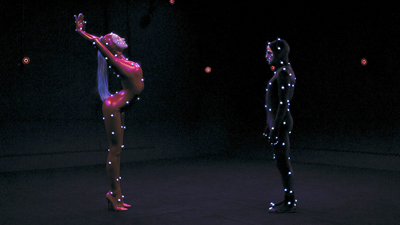
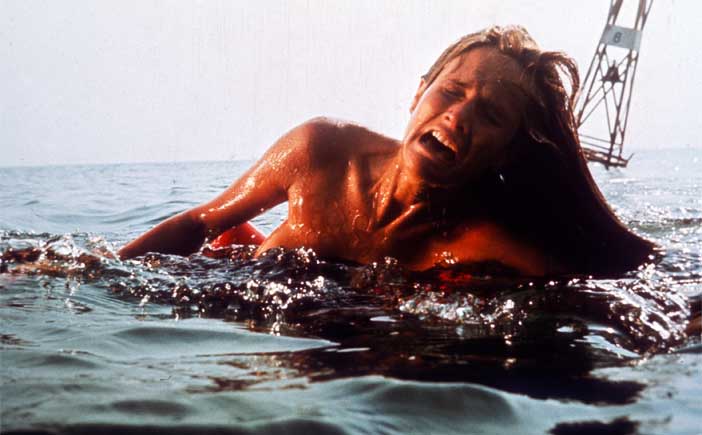
Here are the 10 selections (plus another 10 honourable mentions) that make up what I thought were the very best male performances of 2012.
01.
Matthias Schoenaerts
Rust and Bone
For: the unflinching and half-hidden damage of the role, all knotted up within a man adrift from the social norm. Ali's someone who hasn't found his way in the world the way most people do. Ali ram-raids both the characters’ lives and the film itself. He’s someone who has never been a slave to society’s rules. He’s a complex bulk of muscle and mistakes, a near impenetrable hard-case but with a weak spot glimpsed every so often. Schoenaerts treads effortlessly across the divide between guarded emotion and innate brutality. It’s a performance for the ages, I reckon.
02.
Michael Fassbender
Prometheus
For: the control, the suaveness, the composure and the beautifully expressed physical strictures of the performance. Fassbender let the inherent maliciousness simmer just enough below David’s sheen of courtesy. He was a charming yet ominous act of barely concealed disdain for humanity and curiosity about humankind – deftly conveyed with the politeness of poison. A blink, a head tilt, a raised eyebrow or two, a playful nod to another David, Lean. Fassbender made a fascinating automated "man".
03.
James Gandolfini
Killing Them Softly
For: appropriately appearing to slouch through it in a booze-lashed fug, and for convincing with every pitiful lazy-eyed glance in Pitt’s direction, every resigned sigh (Mickey’s a man who deep down knows his lack of worth) and each bitterly slurred syllable – he growls his regrets like a sore-headed relic. Gandolfini successfully distils the very essence of sourness into one failed man’s personality and provided an unfortunate lifetime’s worth of oily perspiration in a mere two scenes.
04.
Luis Tosar
Even the Rain
For: the sheer triumph of going from being one kind of man to entirely another through a series of tricky events, both political and personal. His Costa, a film producer who doesn’t do things the easy way, swerves cliché and arouses poignancy both by accident and design – particularly toward the end when his character selflessly comes into his own in innumerable crucial ways.
05.
Denis Lavant
Holy Motors
For: adding an uncanny theatrical sting to the grab bag of identities he ‘tried on’. The games he plays here – and his performances are games – are ridiculous, cruel, affecting and playfully unfathomable. Oscar was an experimental vessel, best not treated with too much logic. The beauty of watching Lavant here is seeing an actor go anywhere – and never being able to for one moment assume the subsequent directions. It’s the kind of performance that attempts to make novice film-watchers of us all.
06.
Robert Pattinson
Cosmopolis
For: up-ending expectations as the bored-as-fuck billionaire playboy manipulating the world around him – and fighting back against the world manipulating him – from a slow-rolling tomb. And for slyly proving a wan (yet sparkly) vampire was just a launch pad, only one lucrative strand in his gradually expanding skill set. Pattinson overcame limitations that I – and likely many others – prematurely thought were insuperable for him. I enjoyed being wrong, tested and surprised every minute he was on screen in Cosmopolis.
07.
Matthew Macfadyen
Anna Karenina
For: pilfering the film right from under everyone else’s noses. Macfadyen was the best thing in it (not counting the inventive set design and eye-delighting period threads). His Oblonsky was jaunty, daft, the most alive presence in the film. He loosened the film’s collar and lubricated its starched atmosphere. His crackpot charm was entirely winning; he worked both his lines and his moustache like a seasoned Tolstoy regular. I want an Oblonsky spin-off project, post haste!
08.
Thomas Schubert
Breathing
For: achieving the right level of insouciant blankness and harm befitting a young man penalised, wronged (and as a doer of wrong) and plagued by nagging questions all his life. Schubert’s Roman Kogler could almost be a lost Dardennes drifter – and the manner of his performance does recall the Belgian brothers’ work. He modifies his surly angst as the film goes on, turns it wholly into palpable expectation. It’s a small marvel of a performance.
09.
Jack Black
Bernie
For: sly silliness well refined with acute skill. He had one eye on the daft side – as is Black’s wont – and the other on shifting our perception, just a jolt, of him as a straightforward comedy actor. He played Bernie with delicious abandon, ditching just enough of the usual Blackisms to make it reach further, somewhere new, but keeping the knack for fine ad lib firmly intact. The absurdly funny opening embalming scene was a particular highlight.
10.
Channing Tatum
Magic Mike
For: the casual charm, unfazed amiability and pitch-perfect dance moves. Tatum utilised some of his most readily-drawn-upon talents – and he used them incredibly well; he flipped and rippled his body quicker than a flag in the wind. Tatum knows how to swagger for the camera and you can almost discern a knowing smirk in each scene – but he holds it in check whilst making a merry display of body and personality.
11-20, or Honourable Mentions:
Thomas Doret The Kid with a Bike
/ Scoot McNairy Killing Them Softly
/ Paul Rudd Wanderlust / Brad Pitt Killing Them Softly
/ Theodór Júlíusson Volcano
/ Willem Dafoe The Hunter
/ Mark Ruffalo Avengers Assemble
/ Patton Oswalt Young Adult
Iko Uwais The Raid / Fran Kranz The Cabin in the Woods
31 March 2013
16 February 2013
Which film workplace would you want to work in? The Chickwich or the Best Exotic? The Yankee Pedlar or The Cabin in the Woods?
Warning: the write-up below contains spoilers both textual and pictorial for The Cabin in the Woods (major ones) and Compliance (minor ones).
Just like last year with my piece on Marriage and Other Romantic Pursuits, here’s my write-up for 2013's ‘Motifs in Cinema’ blogging project. The theme I selected this time was 'Work and the Workplace'. Andrew Kendall (from Encore’s World of Film and TV) has the details:
"Motifs in Cinema is a discourse across a collection of film blogs, assessing the way in which various thematic elements have been used in the 2012 cinematic landscape. How does a common theme vary in use from a comedy to a drama? Are filmmakers working from a similar canvas when they assess the issue of death or the dynamics of revenge? Like most things, a film begins with an idea - Motifs in Cinema assesses how the use of a common theme across various films changes when utilised by different artists."
2012 saw many a movie feature characters at play, ease, loose ends, loggerheads and odds in the workplace – as, well, most years do – so let’s assess the situation with a Workplace Suitability Employment-Off. Six films, six workplaces, three rounds, three not-entirely-serious or any way truly insightful write-ups.
Round 1: Social disorder in Public Sector – Compliance vs. Vanishing on 7th Street
I recently saw Compliance, a film where the action rarely leaves its central setting: the (fictional, despite the film being based on actual events) Chickwich fast food restaurant. It’s not a good day for Sandra (Ann Dowd), nor for that matter is it a good day for server Becky (Dreama Walker), or indeed any of Chickwich employees. Someone’s pranking them big time and the outcome looks very bleak indeed. Compliance is not the best film to watch if you have an appraisal coming up at work. It’s not a good film to watch if you’re about to – like, right now say– be called into your boss’s office for a “talk”. But it is a compelling and pertinent film, all told. It’s a tense watch, one that has many quiet sneak-attack moments of commonplace terror around every corner, and on the sound of every phone ring, and it’s incisive about the scarily absurd lengths people go to when told to by a “higher order”. But it’s best to maybe watch it when you have a week off. In fact, watch it at the start of your week off. Better that way.
In comparison, localised apocalyptic horror Vanishing on 7th Street – which largely takes place in and around an isolated Detroit bar – has nothing on Compliance. Vanishing may have shadowy, life-sucking wraiths surrounding the central drink-hole setting, an unstoppable ever-encroaching darkness and a Hayden Christensen performance, but none of that is any match for Pat Healy and a pay-as-you-go phone card.
Workplace Suitability: The Chickwich – 5/10; the bar on 7th Street – 6/10. The Chickwich has a free fast-food meal with every shift and friendly co-workers (as a general rule) who like a good gossip, but an Employee of the Month award might be out of the question. The Vanishing bar does have as much free beer as you want on tap, to help drown out the shrieking wraiths and Christensen’s dialogue, but is it enough when you’re about to be sucked into a vague undying oblivion? Tough call, huh? However, Vanishing wins because at least there’s no one insisting that you to wear a cap with the word Chickwich on it. Then insisting that you, er... take it off.
Round 2: Corporate Wrongdoing – The Cabin in the Woods vs. ATM
Paper-pushers had a hard time of it last year: in meta-horror The Cabin in the Woods and cashpoint slasher ATM white-collar workers young and old saw all manner of fear and terror directed their way. As if the financial crisis wasn’t enough of an employment downer, along comes knife-wielding maniacs who like drawing architectural plans and all the hellish beasts of folk and lore to mess up your work schedule. The office in Cabin isn’t of course your average workplace – nestled deep underground in the middle of nowhere, and with a panoply of otherworldly clients on their books and in their giant rotating filing cabinets, it’s far from the usual 9-5. I’m hazarding a guess that the pay is decent, however, even if the admin may be tricky, but I reckon being called into the Big Boss's office may mean receiving your P45 in the form of, um, eternal damnation. (The interview process here must be absolutely rife with touchy HR issues, too.)
Events are more grounded in ATM. Literally; a killer, for seemingly no apparent reason, has issued a fatwa of pain and suffering on three random twenty-something corporate partygoers and seals them in a cashpoint casket where they flail about like overpaid fish in a tank. Mysterious Killer Guy causes all manner of disruption to their evening before ensuring that all three of them will be late – very late – into work the next day.
Workplace Suitability: the office in the complex under the cabin in the woods – 6/10; that isolated ATM/random anonymous office block; 4/10. Cabin’s monstrous lair has jovial banter (well, to a point) and a cool array of monsters to check out, but long-term prospects may be slim on the ground. ATM’s office seems relatively safe – the killer never actually sets foot there – but, then again, you have to work in the next booth to Josh Peck’s suited number-crunching dullard. So, the ungodly ancient creatures from hell win.
Round 3: Hapless and Horrific Houseguests Abound – The Innkeepers vs. The Best Exotic Marigold Hotel
If you had to choose between staying at a remote, rundown haunt with a bunch of decrepit, ghoulish figures ready to sneak up on you at a moment’s notice, or stay at the Yankee Pedlar Inn in The Innkeepers, which do you choose? I’d go with the relative peace and quiet of the Yankee Pedlar myself. At least the guests there don’t deliver treacly nuggets of homespun wisdom at the drop of a hat or have a “delightful” bumble around amid stereotypically-rendered backdrops once a day. They will scare the bejesus out of you in a cellar, bed or a bathtub – what with them being pallid no-eyed corpses who like the element of surprise – but they won’t have a script-forced life-affirming romance/revelation/realisation up in your face either. The Best Exotic Marigold Hotel is certainly the scarier place. You could cross paths with a bored Judi Dench on the stairs, stumbled across a four-wheeled prejudiced Maggie Smith in the lobby or try and avoid Bill Nighy’s ingratiating dawdler in the hotel courtyard. (And there’s always an awkward Penelope Wilton, a randy Ronald Pickup or a tightly-wound Tom Wilkinson ready to check in.)
As far as workplaces go, the Yankee Pedlar has: a) fluid working hours, and b) not much to actually do (plus you get to stay up late listening for eerie noises whilst eating junk food). The Best Exotic Marigold Hotel has the potential for a coach load of Richard Curtis-a-like old folks (who don’t exactly resemble real old folks based on any kind of real reality) and a rather long and annoying title that you’d have to say and type a lot. Also, I think a front-desk manager job there might well mean having to push Maggie Smith to and fro a series of places whilst she has fussy and adorable conversations about the local food/heat/scenery too. I think I’d rather bathe with a spurious spectre.
Workplace Suitability: the Yankee Pedlar Inn – 7/10; the Best Exotic Marigold Hotel – 2/10. The way I see it, it’s an easy decision: at one hotel you get to lark about with Pat Healy (thankfully without a pay-as-you-go phone card) doing basically nowt; at the other you have to see comically unrealistic types enact an OAP Love Actually. A hag in a wedding gown ready to condemn my soul seems preferable, frankly. (Plus: nifty wallpaper at the Yankee Pedlar.)
Dream job: anything involving ghost hunting/imaginary monsters.
Job from hell: running around ensuring old folks never not be delightfully whimsical and anything involving corporate/cash cubicles.
Just like last year with my piece on Marriage and Other Romantic Pursuits, here’s my write-up for 2013's ‘Motifs in Cinema’ blogging project. The theme I selected this time was 'Work and the Workplace'. Andrew Kendall (from Encore’s World of Film and TV) has the details:
"Motifs in Cinema is a discourse across a collection of film blogs, assessing the way in which various thematic elements have been used in the 2012 cinematic landscape. How does a common theme vary in use from a comedy to a drama? Are filmmakers working from a similar canvas when they assess the issue of death or the dynamics of revenge? Like most things, a film begins with an idea - Motifs in Cinema assesses how the use of a common theme across various films changes when utilised by different artists."
2012 saw many a movie feature characters at play, ease, loose ends, loggerheads and odds in the workplace – as, well, most years do – so let’s assess the situation with a Workplace Suitability Employment-Off. Six films, six workplaces, three rounds, three not-entirely-serious or any way truly insightful write-ups.
Ann Dowd, thinking about her phone bill first and employee welfare second in Compliance
Round 1: Social disorder in Public Sector – Compliance vs. Vanishing on 7th Street
I recently saw Compliance, a film where the action rarely leaves its central setting: the (fictional, despite the film being based on actual events) Chickwich fast food restaurant. It’s not a good day for Sandra (Ann Dowd), nor for that matter is it a good day for server Becky (Dreama Walker), or indeed any of Chickwich employees. Someone’s pranking them big time and the outcome looks very bleak indeed. Compliance is not the best film to watch if you have an appraisal coming up at work. It’s not a good film to watch if you’re about to – like, right now say– be called into your boss’s office for a “talk”. But it is a compelling and pertinent film, all told. It’s a tense watch, one that has many quiet sneak-attack moments of commonplace terror around every corner, and on the sound of every phone ring, and it’s incisive about the scarily absurd lengths people go to when told to by a “higher order”. But it’s best to maybe watch it when you have a week off. In fact, watch it at the start of your week off. Better that way.
Hayden Christensen questions his existence/career in the bottom of a glass in Vanishing on 7th Street
In comparison, localised apocalyptic horror Vanishing on 7th Street – which largely takes place in and around an isolated Detroit bar – has nothing on Compliance. Vanishing may have shadowy, life-sucking wraiths surrounding the central drink-hole setting, an unstoppable ever-encroaching darkness and a Hayden Christensen performance, but none of that is any match for Pat Healy and a pay-as-you-go phone card.
Workplace Suitability: The Chickwich – 5/10; the bar on 7th Street – 6/10. The Chickwich has a free fast-food meal with every shift and friendly co-workers (as a general rule) who like a good gossip, but an Employee of the Month award might be out of the question. The Vanishing bar does have as much free beer as you want on tap, to help drown out the shrieking wraiths and Christensen’s dialogue, but is it enough when you’re about to be sucked into a vague undying oblivion? Tough call, huh? However, Vanishing wins because at least there’s no one insisting that you to wear a cap with the word Chickwich on it. Then insisting that you, er... take it off.
Richard Jenkins talks his employees through his Whiteboard of Terror in The Cabin in the Woods
Round 2: Corporate Wrongdoing – The Cabin in the Woods vs. ATM
Paper-pushers had a hard time of it last year: in meta-horror The Cabin in the Woods and cashpoint slasher ATM white-collar workers young and old saw all manner of fear and terror directed their way. As if the financial crisis wasn’t enough of an employment downer, along comes knife-wielding maniacs who like drawing architectural plans and all the hellish beasts of folk and lore to mess up your work schedule. The office in Cabin isn’t of course your average workplace – nestled deep underground in the middle of nowhere, and with a panoply of otherworldly clients on their books and in their giant rotating filing cabinets, it’s far from the usual 9-5. I’m hazarding a guess that the pay is decent, however, even if the admin may be tricky, but I reckon being called into the Big Boss's office may mean receiving your P45 in the form of, um, eternal damnation. (The interview process here must be absolutely rife with touchy HR issues, too.)
Josh Peck, Brian Geraghty and Alice Eve all regret not doing their banking online in ATM
Events are more grounded in ATM. Literally; a killer, for seemingly no apparent reason, has issued a fatwa of pain and suffering on three random twenty-something corporate partygoers and seals them in a cashpoint casket where they flail about like overpaid fish in a tank. Mysterious Killer Guy causes all manner of disruption to their evening before ensuring that all three of them will be late – very late – into work the next day.
Workplace Suitability: the office in the complex under the cabin in the woods – 6/10; that isolated ATM/random anonymous office block; 4/10. Cabin’s monstrous lair has jovial banter (well, to a point) and a cool array of monsters to check out, but long-term prospects may be slim on the ground. ATM’s office seems relatively safe – the killer never actually sets foot there – but, then again, you have to work in the next booth to Josh Peck’s suited number-crunching dullard. So, the ungodly ancient creatures from hell win.
Sara Paxton realises a bit too late that her room's been double-booked in The Innkeepers
Round 3: Hapless and Horrific Houseguests Abound – The Innkeepers vs. The Best Exotic Marigold Hotel
If you had to choose between staying at a remote, rundown haunt with a bunch of decrepit, ghoulish figures ready to sneak up on you at a moment’s notice, or stay at the Yankee Pedlar Inn in The Innkeepers, which do you choose? I’d go with the relative peace and quiet of the Yankee Pedlar myself. At least the guests there don’t deliver treacly nuggets of homespun wisdom at the drop of a hat or have a “delightful” bumble around amid stereotypically-rendered backdrops once a day. They will scare the bejesus out of you in a cellar, bed or a bathtub – what with them being pallid no-eyed corpses who like the element of surprise – but they won’t have a script-forced life-affirming romance/revelation/realisation up in your face either. The Best Exotic Marigold Hotel is certainly the scarier place. You could cross paths with a bored Judi Dench on the stairs, stumbled across a four-wheeled prejudiced Maggie Smith in the lobby or try and avoid Bill Nighy’s ingratiating dawdler in the hotel courtyard. (And there’s always an awkward Penelope Wilton, a randy Ronald Pickup or a tightly-wound Tom Wilkinson ready to check in.)
Dev Patel tries to explain how he'd rather not work in The Best Exotic Marigold Hotel to Penelope Wilton
As far as workplaces go, the Yankee Pedlar has: a) fluid working hours, and b) not much to actually do (plus you get to stay up late listening for eerie noises whilst eating junk food). The Best Exotic Marigold Hotel has the potential for a coach load of Richard Curtis-a-like old folks (who don’t exactly resemble real old folks based on any kind of real reality) and a rather long and annoying title that you’d have to say and type a lot. Also, I think a front-desk manager job there might well mean having to push Maggie Smith to and fro a series of places whilst she has fussy and adorable conversations about the local food/heat/scenery too. I think I’d rather bathe with a spurious spectre.
Workplace Suitability: the Yankee Pedlar Inn – 7/10; the Best Exotic Marigold Hotel – 2/10. The way I see it, it’s an easy decision: at one hotel you get to lark about with Pat Healy (thankfully without a pay-as-you-go phone card) doing basically nowt; at the other you have to see comically unrealistic types enact an OAP Love Actually. A hag in a wedding gown ready to condemn my soul seems preferable, frankly. (Plus: nifty wallpaper at the Yankee Pedlar.)
Dream job: anything involving ghost hunting/imaginary monsters.
Job from hell: running around ensuring old folks never not be delightfully whimsical and anything involving corporate/cash cubicles.
29 January 2013
Best 15 Films of 2012
Here are my picks for the best 15 films of 2012. The films are in alphabetical order, with one film highlighted as my *Film of the Year* (All films received a theatrical release in the UK between January 1st and December 31st)
Because: it asks, like very few other recent films have (outside of Holy Motors), How do you fake like you care? Well, you can't. Alps is a bold, wry study of liminal grief where perplexity rules just fine. It’s a wily little number, as cheeky as it is frank and near-unfathomable, and eager to push an audience’s sense of narrative orientation to an absurd extreme. With a loose hold on logic, it near as dammit begs you to abandon its wonky, wayward path and seek out a more linear entertainment. But perseverance pays dividends: it gradually reveals itself as an amusing anomalous puzzle. What it says is: identity can blur to the nth degree; death is insurmountable; we all go a little mad sometimes. Alps hasn't stopped sloshing around my brain since I saw it late last year. Having slept on it – and on it some more – it still mesmerises. I now contentedly flit between a state of fuzzy perplexity and... *blankface*
Because: it’s finely synthesised pure Super-glee! A film that, without any allusions to pretense, prides itself on maintaining a high-end level of sheer entertainment. Clearly lovingly smacked together with a hefty focus on achieving fast-paced spectacle, Avenger’s Assemble was a joyful example of what someone can do with a rich history of familiar characters and worlds (and pre-existing franchises). Whedon made it all cohere in game, splendid fashion. The giddy banter and playful dialogue nimbly whipped off the characters’ tongues, and I particularly enjoyed the fluid domino-effect action direction, choice cameos and, well, anytime the Hulk muscled his way on screen. There were no dips, lulls or moments that straggled; it was sheer full-pelt momentum, and as much grand fun as could be thrown into 143 minutes. I’m glad there will be another one.
Because: it took a curious glance at isolation and death, from the perspective of a character who’s dragged himself through ongoing hardship and strife, and it saw renewed life. Its hard-won glimmers of hope were well earned. Breathing’s precise, vivid images, courtesy of first-time director Karl Markovics, felt fresh and contained a restrained potency that established a quality tone from the first scene on. The economy of plot is often astonishing. Its rich arousal of guarded feeling within the characters, which gradually morphs into wholly open acceptance, is one of the many well-conveyed aspects to be celebrated. Lead actor Thomas Schubert gives a strong, moving performance, free of needless affectation, which grounds the film; he provides it with much of its pared-down power. A superb debut. I’m eager to see what Markovics does next.
Because: it was a genuine delight, a gem of comely proportions with a charm all its own. Having been lukewarm on a couple of Whit Stillman’s previous films (Metropolitan, The Last Days of Disco) my expectations were low-to-untroubled. But a few years out has evidently triggered a sense of exuberance, of soft calamity, in his approach to directing, as he’s made his most perky, revivifying film yet. It was at once an archaic hark back to some kind of pale eighties nostalgia town and a joyous skip forward, a delicate response to the sometimes sour nature of many current school-set films. The script flows with frequent well-placed and -spoken corkers and the use of precise and delicious comic language complemented the pastel-prim visual panache. Greta Gerwig and co. were all on top, amiable form. My favourite line, of many: "Thor can't tell the colours. Rainbows must be just a lot of gibberish to him."
Because: it’s about a housewife in a Hitchcockian quandary. Sometimes that’s purely enough for me. It’s darkly human – an ink-hued, life-bruised marvel. An astonishingly economic film, tautly made with assured filmmaking force. It keeps its mysteries eloquently compacted within every line and action, and advances character and plot in progressive, piecemeal fashion. The crux of the film is subtle, but it’s right there, hidden in plain view, if you like, and made just that little bit more concrete with each shot. Nadezhda Markina is remarkable as Elena. She displays so much conflict and submerged feeling in her gestures; it’s a performance that soars on intuition, simplicity. Kudos goes to Mikhail Krichman’s dank, noirish photography and the best (re)use of Phillip Glass’ music on film in quite some time. It’s more compact than The Return, less winding than The Banishment; it’s Zvyagintsev’s best film yet.
Because: Bruno Dumont knows how to make an idea, an image, a film stick in the mind in uncommon ways. He’s a clever yet, at times, frustrating filmmaker. I’ve not always enjoyed his films, let’s say, or seen the fuss in some of them (I’m nonplussed to the praise given to La vie de Jésus and Twentynine Palms), but when he gets it right, as he does here and with Hors Satan and Flandres, he’s one of the most captivating filmmakers working, someone who manages to impart stone-cold plot in rich, elusive and sometimes downright infuriating ways. I duly appreciate him for that. Hadewijch – made in 2009, but only released in the UK last year – was full of bold, clear images that fluently play out and then slowly, curiously crack apart. More than many filmmakers of his calibre, I find myself blind as to his intentions until they sneak up and almost wilfully shove me in a direction I wasn’t expecting or entirely sure about. But that’s the fascination inherent in his work. This is firm and often quietly forceful stuff that appeals as much to emotional resonance as it does to intellectual stimulation. I'm often bewildered with where he takes me, but am glad he tells stories that require a responsive investment.
Because: motion-capture lizard sex. The accordion entr’acte. Kylie in a dowdy Jean Seberg wig serenading a lover and an abandoned department store at the same time. A high-rise family of apes. Eva Mendes pouting to within an inch of her life in a graveyard – and then a cave. Edith Scob looking suave and sexy as a chauffeur. A criminal killing of the weirdest and most baffling kind. Monstrous movie-theatre beasts, makeup and merde. But perhaps most of all: Denis Lavant as a panoply of people – personas? acts? identities? forgotten cinematic ghosts? – all emanating from the doors of a limo that talks to you by the end credits. If I didn’t praise a film that so playfully and wilfully embraces the bizarre and the inventive like this, then there would be little point in demanding something more from cinema. All manner of film history appears to be referenced by Leos Carax here, but isn’t it perhaps simply the Monty Python episode of our dreams?
Because: frank depictions of gay life are too few and far between, especially this beautifully shot and subtly heart-rending. There’s an easy charm to the story of this group of amiable guys making and breaking up. Director Travis Mathews films in a close, intimate way that allows revealing insights into their sometimes fun, sometimes introspective – yet most often explicit – and easy-going personalities. The handful of likeable characters felt real, unaffected by some of the over-familiar clichés that some mainstream gay cinema often offers up. You get a feeling for a rich, charming San Francisco that chimes with the film’s plot arc: why do you need to leave a place when what you have there is almost perfect? Mathews depicts 21st century gay relationships in an honest, open way. In some small way I Want Your Love is an affectionate retelling of Maupin’s Tales of the City in microcosm. And it’s every bit as refreshing and thought-provoking as last year’s similarly-themed Weekend. It deserves just as much praise, too. (More on I Want Your Love – interview with Travis Mathews and review – here)
Because: it was a miniature gem, yet no less expansive in nature, that achieved grand aims in detailing an affecting story of loss and connection with exquisite skill. The Belgian brothers rarely, if ever, falter. The quality of the story and imagery here follows in fine fashion their exploration of low-key and left-of-centre fascinating lives lived beyond the realms of glamour or privilege. It’s human, focused and rich, as ever; the brighter disposition and glimpses of hope enhance and lift, not diminish, their art. Plus, those four brief Beethoven blasts bypassed all my critical faculties to grab directly at my tear ducts. It reminded me that a raw emotive response – like laughter and fear – often speaks a louder truth than any over-padded analysis. Plus De France and Doret are exceptional. (More on Cécile De France in The Kid with a Bike here)
Because: it’s a terse, compulsive crime film that jolts along with a dirty rhythm and an angry tone of disaffection. The characters may swan about in, alternatively, thrifty threads and natty-chic clothing, but each one of them is grounded by authenticity. Every actor excels here, often at glorious length. Dominik allows his cast carefully drawn-out scenes in which they flex their specified personas – as ugly, overconfident, pathetic or wrongheaded as they are. Pitt and McNairy shone bright; Dominik knows how to show off Pitt’s smarmy-suave nature (also see Jesse James) and he gets best-so-far work from the up-and-coming McNairy. But Gandolfini was the gold standard here. His two talk-heavy scenes were exercises in weaselly pitiful characterisation; he gave resoundingly sad life to a man we maybe wouldn’t care to know. Killing’s outlook is bleak and its politics front and centre; the hotly contested political subtext seemed more like just text to me. It was fervent in its message to a country gone to – and heading toward further – wrack and ruin. Dominik’s sour, stylish fractured criminal world was full of urgent filmmaking.
Because: like Alps, it made me work overtime in the best way; at every turn it made me question the (dis)order of narrative filmmaking without ever letting its guard down or quite giving me the slip. It trod a fine narrative balance between crafty and clear whilst judiciously keeping its core intentions tantalisingly closed off. It taxed my senses like a surreal accountant and prodded my brain with a probable, possible imaginary stick in all the right places. Debut (feature) director Sean Durkin has a solid style that I hope he expands and develops in future. The evocation of a pair of rural environments, both as underhand and filled with uncertainty as each other, despite their differences and allures, was key to the slippery way Durkin aroused atmosphere in an almost pungent manner. On the evidence of Martha Marcy..., he has an exciting, promising road ahead. Unlike, perhaps, his protagonist here...
Because: it's science fiction driven by striking visuals, searching ideas and exhilarating moments of curious wonder. It was occasionally audacious, even reckless at times; it tapped directly into my thrill temples. It’s a film with so much pumped-up momentum and strange imagery that I forgave its few stumbles. Some of the stuff that bothered many didn’t bother me. And there was so much else to revel in anyway. It wasn't flawless, but even its imperfections were interesting (and much of the tonal chaos evaporated on subsequent viewings). Stellar special effects, efficient editing, expansive photography (few films looked as bold, as exotic as this last year) and some lithe, deft direction from Ridley Scott all made it a spectacular treat. Its successes far outweigh its structural issues. I'll take adventurous, disorderly and involving sci-fi filmmaking that strives for a raft of intriguing ideas, alongside some genuine thrills, over many other films any day. Also: they do run sideways. Prometheus is a lot more fun when you pay attention. And it worked just splendidly for me. (More on Prometheus here)
Because: it was the one film last year that completely and unexpectedly punched me properly in the heart zone and blitzed my senses on numerous occasions over its duration. It was a deftly blended genre combination – a gritty melodrama? a grim romance – made with guts and a compassionate eye on all the things that make life sublime, messy, truthful. It’s an unabashed film made from raw ingredients and flush with ragged, ardent emotion – and at no point does it misuse it. Full of moments of harshness and poignancy, it showed that unexpected connections can be the stuff of intimate human spectacle. It’s the kind of ballsy, open-hearted and quirk-free romance that I can get behind. See also: Japanese Story (2003) and Head-On (2005).
Because: in a year in which Haneke’s Amour was, by and large, solely highlighted as the year’s best film to deal with old age and terminal illness, Rúnarsson made, well, just that with Volcano. The lives of an elderly couple are given sensitive and heartbreaking attention; the husband is fraught with burden and frustration at his wife’s illness. His life is shown as equally beleaguered by pain and suffering as hers, though clearly suffering of a different kind – the kind that those left behind pre-empt and feel. But what he does, and how Rúnarsson depicts it, is conveyed with a tender, wrenching focus. Amid crisply-shot Iceland vistas, the narrative of the couple’s – and their immediate relatives’ – lives plays out. It makes room not only for sorrow, but also lightly affecting humour. Theodór Júlíusson gives a great central performance and Rúnarsson directs with instinctual flair. I’d say it’s warmer, maybe, slightly more humane, and certainly messier in its arousal of intimate tragedy than Haneke’s fine film. And I think I preferred it just a little bit more because of this.
Because: thoughtful, keenly-focused portraits of caustic, acerbic regret aren’t too easy to come by, especially this pointed and pin-sharp. It’s essentially a prom queen's rude awakening – one that has taken many years steeped in self-delusion to come about. Charlize Theron’s YA ghost-author Mavis Gary is a remarkable creation. She’s a character that, at the same time, I both cared about and willed to... just stop; and equally found drawn from truth and experience. Theron gives a poignantly precise and layered centrepiece performance that royally shows up many other 2012 turns. But it’s remarkably crafted and played excellently by all (Patrick Wilson’s spot-on everyman and Patton Oswalt’s home-rooted geek especially). It certainly rewards further viewing: on second watch its sense of sadness and its wicked way with words and cringe-inducing situations were beautifully reinforced; so, too, was its accomplished editing (by Dana E. Glauberman). This is a genuine keeper for years to come. I reckon it’s Jason Reitman’s best film by a mile. (More on Charlize Theron in Young Adult here)
15 more films I liked (listed alphabetically): Amour / Bernie / Bombay Beach / The Cabin in the Woods / Carnage / Crazy Horse / Dredd / Even the Rain / The Housemaid / The Innkeepers / Magic Mike / Marina Abramović: The Artist is Present / Nostalgia for the Light / Patience (After Sebald) / A Simple Life
Surprises: films that I had little expectation for, but turned out beter than I thought they would (listed alphabetically): Absentia / Chernobyl Diaries / Dark Shadows / Goon / Hell / Jeff, Who Lives at Home / The Pact / Ruby Sparks / Seeking a Friend for the End of the World / Small, Beautifully Moving Parts
Alps (Giorgos Lanthimos, Greece)
Because: it asks, like very few other recent films have (outside of Holy Motors), How do you fake like you care? Well, you can't. Alps is a bold, wry study of liminal grief where perplexity rules just fine. It’s a wily little number, as cheeky as it is frank and near-unfathomable, and eager to push an audience’s sense of narrative orientation to an absurd extreme. With a loose hold on logic, it near as dammit begs you to abandon its wonky, wayward path and seek out a more linear entertainment. But perseverance pays dividends: it gradually reveals itself as an amusing anomalous puzzle. What it says is: identity can blur to the nth degree; death is insurmountable; we all go a little mad sometimes. Alps hasn't stopped sloshing around my brain since I saw it late last year. Having slept on it – and on it some more – it still mesmerises. I now contentedly flit between a state of fuzzy perplexity and... *blankface*
Avengers Assemble (Joss Whedon, USA)
Because: it’s finely synthesised pure Super-glee! A film that, without any allusions to pretense, prides itself on maintaining a high-end level of sheer entertainment. Clearly lovingly smacked together with a hefty focus on achieving fast-paced spectacle, Avenger’s Assemble was a joyful example of what someone can do with a rich history of familiar characters and worlds (and pre-existing franchises). Whedon made it all cohere in game, splendid fashion. The giddy banter and playful dialogue nimbly whipped off the characters’ tongues, and I particularly enjoyed the fluid domino-effect action direction, choice cameos and, well, anytime the Hulk muscled his way on screen. There were no dips, lulls or moments that straggled; it was sheer full-pelt momentum, and as much grand fun as could be thrown into 143 minutes. I’m glad there will be another one.
Breathing (Karl Markovics, Austria)
Because: it took a curious glance at isolation and death, from the perspective of a character who’s dragged himself through ongoing hardship and strife, and it saw renewed life. Its hard-won glimmers of hope were well earned. Breathing’s precise, vivid images, courtesy of first-time director Karl Markovics, felt fresh and contained a restrained potency that established a quality tone from the first scene on. The economy of plot is often astonishing. Its rich arousal of guarded feeling within the characters, which gradually morphs into wholly open acceptance, is one of the many well-conveyed aspects to be celebrated. Lead actor Thomas Schubert gives a strong, moving performance, free of needless affectation, which grounds the film; he provides it with much of its pared-down power. A superb debut. I’m eager to see what Markovics does next.
Damsels in Distress (Whit Stillman, USA)
Because: it was a genuine delight, a gem of comely proportions with a charm all its own. Having been lukewarm on a couple of Whit Stillman’s previous films (Metropolitan, The Last Days of Disco) my expectations were low-to-untroubled. But a few years out has evidently triggered a sense of exuberance, of soft calamity, in his approach to directing, as he’s made his most perky, revivifying film yet. It was at once an archaic hark back to some kind of pale eighties nostalgia town and a joyous skip forward, a delicate response to the sometimes sour nature of many current school-set films. The script flows with frequent well-placed and -spoken corkers and the use of precise and delicious comic language complemented the pastel-prim visual panache. Greta Gerwig and co. were all on top, amiable form. My favourite line, of many: "Thor can't tell the colours. Rainbows must be just a lot of gibberish to him."
Elena (Andrey Zvyagintsev/Russia)
Because: it’s about a housewife in a Hitchcockian quandary. Sometimes that’s purely enough for me. It’s darkly human – an ink-hued, life-bruised marvel. An astonishingly economic film, tautly made with assured filmmaking force. It keeps its mysteries eloquently compacted within every line and action, and advances character and plot in progressive, piecemeal fashion. The crux of the film is subtle, but it’s right there, hidden in plain view, if you like, and made just that little bit more concrete with each shot. Nadezhda Markina is remarkable as Elena. She displays so much conflict and submerged feeling in her gestures; it’s a performance that soars on intuition, simplicity. Kudos goes to Mikhail Krichman’s dank, noirish photography and the best (re)use of Phillip Glass’ music on film in quite some time. It’s more compact than The Return, less winding than The Banishment; it’s Zvyagintsev’s best film yet.
Hadewijch (Bruno Dumont, France)
Because: Bruno Dumont knows how to make an idea, an image, a film stick in the mind in uncommon ways. He’s a clever yet, at times, frustrating filmmaker. I’ve not always enjoyed his films, let’s say, or seen the fuss in some of them (I’m nonplussed to the praise given to La vie de Jésus and Twentynine Palms), but when he gets it right, as he does here and with Hors Satan and Flandres, he’s one of the most captivating filmmakers working, someone who manages to impart stone-cold plot in rich, elusive and sometimes downright infuriating ways. I duly appreciate him for that. Hadewijch – made in 2009, but only released in the UK last year – was full of bold, clear images that fluently play out and then slowly, curiously crack apart. More than many filmmakers of his calibre, I find myself blind as to his intentions until they sneak up and almost wilfully shove me in a direction I wasn’t expecting or entirely sure about. But that’s the fascination inherent in his work. This is firm and often quietly forceful stuff that appeals as much to emotional resonance as it does to intellectual stimulation. I'm often bewildered with where he takes me, but am glad he tells stories that require a responsive investment.
Holy Motors (Leos Carax, France/Germany)
Because: motion-capture lizard sex. The accordion entr’acte. Kylie in a dowdy Jean Seberg wig serenading a lover and an abandoned department store at the same time. A high-rise family of apes. Eva Mendes pouting to within an inch of her life in a graveyard – and then a cave. Edith Scob looking suave and sexy as a chauffeur. A criminal killing of the weirdest and most baffling kind. Monstrous movie-theatre beasts, makeup and merde. But perhaps most of all: Denis Lavant as a panoply of people – personas? acts? identities? forgotten cinematic ghosts? – all emanating from the doors of a limo that talks to you by the end credits. If I didn’t praise a film that so playfully and wilfully embraces the bizarre and the inventive like this, then there would be little point in demanding something more from cinema. All manner of film history appears to be referenced by Leos Carax here, but isn’t it perhaps simply the Monty Python episode of our dreams?
I Want Your Love (Travis Mathews, USA)
Because: frank depictions of gay life are too few and far between, especially this beautifully shot and subtly heart-rending. There’s an easy charm to the story of this group of amiable guys making and breaking up. Director Travis Mathews films in a close, intimate way that allows revealing insights into their sometimes fun, sometimes introspective – yet most often explicit – and easy-going personalities. The handful of likeable characters felt real, unaffected by some of the over-familiar clichés that some mainstream gay cinema often offers up. You get a feeling for a rich, charming San Francisco that chimes with the film’s plot arc: why do you need to leave a place when what you have there is almost perfect? Mathews depicts 21st century gay relationships in an honest, open way. In some small way I Want Your Love is an affectionate retelling of Maupin’s Tales of the City in microcosm. And it’s every bit as refreshing and thought-provoking as last year’s similarly-themed Weekend. It deserves just as much praise, too. (More on I Want Your Love – interview with Travis Mathews and review – here)
The Kid with a Bike (Jean-Pierre & Luc Dardenne, Belgium/France/Italy)
Because: it was a miniature gem, yet no less expansive in nature, that achieved grand aims in detailing an affecting story of loss and connection with exquisite skill. The Belgian brothers rarely, if ever, falter. The quality of the story and imagery here follows in fine fashion their exploration of low-key and left-of-centre fascinating lives lived beyond the realms of glamour or privilege. It’s human, focused and rich, as ever; the brighter disposition and glimpses of hope enhance and lift, not diminish, their art. Plus, those four brief Beethoven blasts bypassed all my critical faculties to grab directly at my tear ducts. It reminded me that a raw emotive response – like laughter and fear – often speaks a louder truth than any over-padded analysis. Plus De France and Doret are exceptional. (More on Cécile De France in The Kid with a Bike here)
Killing Them Softly (Andrew Dominik, USA)
Because: it’s a terse, compulsive crime film that jolts along with a dirty rhythm and an angry tone of disaffection. The characters may swan about in, alternatively, thrifty threads and natty-chic clothing, but each one of them is grounded by authenticity. Every actor excels here, often at glorious length. Dominik allows his cast carefully drawn-out scenes in which they flex their specified personas – as ugly, overconfident, pathetic or wrongheaded as they are. Pitt and McNairy shone bright; Dominik knows how to show off Pitt’s smarmy-suave nature (also see Jesse James) and he gets best-so-far work from the up-and-coming McNairy. But Gandolfini was the gold standard here. His two talk-heavy scenes were exercises in weaselly pitiful characterisation; he gave resoundingly sad life to a man we maybe wouldn’t care to know. Killing’s outlook is bleak and its politics front and centre; the hotly contested political subtext seemed more like just text to me. It was fervent in its message to a country gone to – and heading toward further – wrack and ruin. Dominik’s sour, stylish fractured criminal world was full of urgent filmmaking.
Martha Marcy May Marlene (Sean Durkin, USA)
Because: like Alps, it made me work overtime in the best way; at every turn it made me question the (dis)order of narrative filmmaking without ever letting its guard down or quite giving me the slip. It trod a fine narrative balance between crafty and clear whilst judiciously keeping its core intentions tantalisingly closed off. It taxed my senses like a surreal accountant and prodded my brain with a probable, possible imaginary stick in all the right places. Debut (feature) director Sean Durkin has a solid style that I hope he expands and develops in future. The evocation of a pair of rural environments, both as underhand and filled with uncertainty as each other, despite their differences and allures, was key to the slippery way Durkin aroused atmosphere in an almost pungent manner. On the evidence of Martha Marcy..., he has an exciting, promising road ahead. Unlike, perhaps, his protagonist here...
Prometheus (Ridley Scott, USA/UK)
Because: it's science fiction driven by striking visuals, searching ideas and exhilarating moments of curious wonder. It was occasionally audacious, even reckless at times; it tapped directly into my thrill temples. It’s a film with so much pumped-up momentum and strange imagery that I forgave its few stumbles. Some of the stuff that bothered many didn’t bother me. And there was so much else to revel in anyway. It wasn't flawless, but even its imperfections were interesting (and much of the tonal chaos evaporated on subsequent viewings). Stellar special effects, efficient editing, expansive photography (few films looked as bold, as exotic as this last year) and some lithe, deft direction from Ridley Scott all made it a spectacular treat. Its successes far outweigh its structural issues. I'll take adventurous, disorderly and involving sci-fi filmmaking that strives for a raft of intriguing ideas, alongside some genuine thrills, over many other films any day. Also: they do run sideways. Prometheus is a lot more fun when you pay attention. And it worked just splendidly for me. (More on Prometheus here)
Rust and Bone (Jacques Audiard, France/Belgium) *Film of the Year*
Because: it was the one film last year that completely and unexpectedly punched me properly in the heart zone and blitzed my senses on numerous occasions over its duration. It was a deftly blended genre combination – a gritty melodrama? a grim romance – made with guts and a compassionate eye on all the things that make life sublime, messy, truthful. It’s an unabashed film made from raw ingredients and flush with ragged, ardent emotion – and at no point does it misuse it. Full of moments of harshness and poignancy, it showed that unexpected connections can be the stuff of intimate human spectacle. It’s the kind of ballsy, open-hearted and quirk-free romance that I can get behind. See also: Japanese Story (2003) and Head-On (2005).
Volcano (Rúnar Rúnarsson, Iceland/Denmark)
Because: in a year in which Haneke’s Amour was, by and large, solely highlighted as the year’s best film to deal with old age and terminal illness, Rúnarsson made, well, just that with Volcano. The lives of an elderly couple are given sensitive and heartbreaking attention; the husband is fraught with burden and frustration at his wife’s illness. His life is shown as equally beleaguered by pain and suffering as hers, though clearly suffering of a different kind – the kind that those left behind pre-empt and feel. But what he does, and how Rúnarsson depicts it, is conveyed with a tender, wrenching focus. Amid crisply-shot Iceland vistas, the narrative of the couple’s – and their immediate relatives’ – lives plays out. It makes room not only for sorrow, but also lightly affecting humour. Theodór Júlíusson gives a great central performance and Rúnarsson directs with instinctual flair. I’d say it’s warmer, maybe, slightly more humane, and certainly messier in its arousal of intimate tragedy than Haneke’s fine film. And I think I preferred it just a little bit more because of this.
Young Adult (Jason Reitman, USA)
Because: thoughtful, keenly-focused portraits of caustic, acerbic regret aren’t too easy to come by, especially this pointed and pin-sharp. It’s essentially a prom queen's rude awakening – one that has taken many years steeped in self-delusion to come about. Charlize Theron’s YA ghost-author Mavis Gary is a remarkable creation. She’s a character that, at the same time, I both cared about and willed to... just stop; and equally found drawn from truth and experience. Theron gives a poignantly precise and layered centrepiece performance that royally shows up many other 2012 turns. But it’s remarkably crafted and played excellently by all (Patrick Wilson’s spot-on everyman and Patton Oswalt’s home-rooted geek especially). It certainly rewards further viewing: on second watch its sense of sadness and its wicked way with words and cringe-inducing situations were beautifully reinforced; so, too, was its accomplished editing (by Dana E. Glauberman). This is a genuine keeper for years to come. I reckon it’s Jason Reitman’s best film by a mile. (More on Charlize Theron in Young Adult here)
15 more films I liked (listed alphabetically): Amour / Bernie / Bombay Beach / The Cabin in the Woods / Carnage / Crazy Horse / Dredd / Even the Rain / The Housemaid / The Innkeepers / Magic Mike / Marina Abramović: The Artist is Present / Nostalgia for the Light / Patience (After Sebald) / A Simple Life
Surprises: films that I had little expectation for, but turned out beter than I thought they would (listed alphabetically): Absentia / Chernobyl Diaries / Dark Shadows / Goon / Hell / Jeff, Who Lives at Home / The Pact / Ruby Sparks / Seeking a Friend for the End of the World / Small, Beautifully Moving Parts
29 December 2012
Best Female Performances 2012
Here are the 10 selections (plus another 10 honourable mentions) that make up what I thought were the very best female performances of 2012.
01.
Marion Cotillard
Rust and Bone
For: damn well breaking my heart in a multitude of new places, and in innumerable ways. Everything about Stéphanie – every glance, smile and, particularly, arm movement (man, that balcony scene...) – was conveyed with effortless emotion and exemplary skill. Cotillard was spellbinding here. A rich, rewarding performance that will stay with me for a very long time.
02.
Cécile De France
The Kid with a Bike
For: the simple, subtle ways in which she made unshowy, deeply felt warmth and decency a grounded and inherent virtue. De France's hairdresser Samantha was one of the best, fascinating and most giving characters of the year. In terms of sheer, fuss-free human commitment, she shone bright in a singular fashion. And the way her face beamed...
03.
Charlize Theron
Young Adult
For: daring to play such a complicated and hard to like bitch of, equally, confounding and compelling proportions. Mavis was a fascinating creature who earned genuine sympathy. This is a true one-off performance: she's someone who we rarely get to see on screen. A clever, precise piece of acting. Theron’s best performance to date.
04.
Nadezhda Markina
Elena
For: keeping a cast-iron poker face throughout the pain-ridden, desperate entirety of Zvyagintsev’s masterful film. And for carefully letting us in on the intimate workings of Elena's actions and troubled psyche. Markina displayed such exquisite poise and pensiveness as to be almost like a statue made flesh. She's a housewife in a Hitchcockian quandry.
05.
Greta Gerwig
Damsels in Distress
For: her “tailspin”, her Sambola, her dishing out of doughnuts, her politely flippant turn of phrase in every scene, her suicide prevention techniques, her good-natured side that masks a humorous spikiness, her adroit way with making Whit Stillman’s words sing, and zing. This is Gerwig's best role so far.
06.
Emmanuelle Riva
Amour
For: making stillness feel integral in a fragile display of suffering that never once resorts to a needless simplicity. Riva is a one-woman futile barrier against inevitable defeat. Her performance was quietly, integrally heartbreaking – even terrifying in a vast and utterly human way. It's her face, lost in her husband's hands, that I remember most about Amour.
07.
Elizabeth Olsen
Martha Marcy May Marlene
For: arriving out of nowhere, pretty much, and creating a deft balance of mystery and mania with both grand and minute subtle shifts in personality. Martha, Marcy May, Marlene? Whoever this girl is – and we’re better off being left in the psychological fog – Olsen made sure she was evasive and confounding enough to vividly hold our attention.
08.
Kate Winslet
Carnage
For: her spot-on manic fluster in playing a woman so backed-up with forced social niceties that her outburts teeter on the cusp of absurdity. Winslet flirts with farce, but never lets the icy precision of this embittered, well-heeled class obsessive free of her grasp. She's spiky, vomitous, brilliant. The flower throwing was a great bonus.
09.
Yeo-jeong Yoon
The Housemaid
For: being the slyly magnetic force – in a film full of untrustworthy and alluring figures – that makes The Housemaid tick. Yoon shows older housemaid Byung-sik’s years of experience and inner workings without so much as a flicker of hesitation. She's the key figure here, and the film's secret weapon.
10.
Aggeliki Papoulia
Alps
For: the way she kept back everything intrinsic about the performance, but let tiny slivers of disturbing unbalance creep incrementally through until... the Alps "act" broke spectacularly down. A feat of withholding that results in a fractured whirl of pitiful sadness.
11-20, or Honourable Mentions:
Noomi Rapace Prometheus / Gina Gershon Killer Joe / Deannie Ip A Simple Life / Julie Sokolowski Hadewijch / Nina Hoss Barbara / Ari Graynor For a Good Time, Call... / Hannah Herzsprung Hell / Anna Margaret Hollyman Small, Beautifully Moving Parts / Nicole Beharie Shame / Jemima Kirke Tiny Furniture
Next: male performances and best films of the year.
01.
Marion Cotillard
Rust and Bone
For: damn well breaking my heart in a multitude of new places, and in innumerable ways. Everything about Stéphanie – every glance, smile and, particularly, arm movement (man, that balcony scene...) – was conveyed with effortless emotion and exemplary skill. Cotillard was spellbinding here. A rich, rewarding performance that will stay with me for a very long time.
02.
Cécile De France
The Kid with a Bike
For: the simple, subtle ways in which she made unshowy, deeply felt warmth and decency a grounded and inherent virtue. De France's hairdresser Samantha was one of the best, fascinating and most giving characters of the year. In terms of sheer, fuss-free human commitment, she shone bright in a singular fashion. And the way her face beamed...
03.
Charlize Theron
Young Adult
For: daring to play such a complicated and hard to like bitch of, equally, confounding and compelling proportions. Mavis was a fascinating creature who earned genuine sympathy. This is a true one-off performance: she's someone who we rarely get to see on screen. A clever, precise piece of acting. Theron’s best performance to date.
04.
Nadezhda Markina
Elena
For: keeping a cast-iron poker face throughout the pain-ridden, desperate entirety of Zvyagintsev’s masterful film. And for carefully letting us in on the intimate workings of Elena's actions and troubled psyche. Markina displayed such exquisite poise and pensiveness as to be almost like a statue made flesh. She's a housewife in a Hitchcockian quandry.
05.
Greta Gerwig
Damsels in Distress
For: her “tailspin”, her Sambola, her dishing out of doughnuts, her politely flippant turn of phrase in every scene, her suicide prevention techniques, her good-natured side that masks a humorous spikiness, her adroit way with making Whit Stillman’s words sing, and zing. This is Gerwig's best role so far.
06.
Emmanuelle Riva
Amour
For: making stillness feel integral in a fragile display of suffering that never once resorts to a needless simplicity. Riva is a one-woman futile barrier against inevitable defeat. Her performance was quietly, integrally heartbreaking – even terrifying in a vast and utterly human way. It's her face, lost in her husband's hands, that I remember most about Amour.
07.
Elizabeth Olsen
Martha Marcy May Marlene
For: arriving out of nowhere, pretty much, and creating a deft balance of mystery and mania with both grand and minute subtle shifts in personality. Martha, Marcy May, Marlene? Whoever this girl is – and we’re better off being left in the psychological fog – Olsen made sure she was evasive and confounding enough to vividly hold our attention.
08.
Kate Winslet
Carnage
For: her spot-on manic fluster in playing a woman so backed-up with forced social niceties that her outburts teeter on the cusp of absurdity. Winslet flirts with farce, but never lets the icy precision of this embittered, well-heeled class obsessive free of her grasp. She's spiky, vomitous, brilliant. The flower throwing was a great bonus.
09.
Yeo-jeong Yoon
The Housemaid
For: being the slyly magnetic force – in a film full of untrustworthy and alluring figures – that makes The Housemaid tick. Yoon shows older housemaid Byung-sik’s years of experience and inner workings without so much as a flicker of hesitation. She's the key figure here, and the film's secret weapon.
10.
Aggeliki Papoulia
Alps
For: the way she kept back everything intrinsic about the performance, but let tiny slivers of disturbing unbalance creep incrementally through until... the Alps "act" broke spectacularly down. A feat of withholding that results in a fractured whirl of pitiful sadness.
11-20, or Honourable Mentions:
Noomi Rapace Prometheus / Gina Gershon Killer Joe / Deannie Ip A Simple Life / Julie Sokolowski Hadewijch / Nina Hoss Barbara / Ari Graynor For a Good Time, Call... / Hannah Herzsprung Hell / Anna Margaret Hollyman Small, Beautifully Moving Parts / Nicole Beharie Shame / Jemima Kirke Tiny Furniture
Next: male performances and best films of the year.
26 December 2012
Ten Worst (or, 'Not for Me, Thanks') 2012 Films – Plus 10 Disappointments
First, here's a brief list of 10 disappointments in 2012. Essentially, these are films that I thought might have had a chance of perhaps taking a higher spot in the films of the year, but ended up being less than the sum of their parts:
A Useful Life,
The Descendants,
Vanishing on 7th Street,
La Havre,
Room 237,
Beyond the Black Rainbow,
Silver Linings Playbook,
The Turin Horse,
Like Crazy,
The Loneliest Planet.
But here are 10 films which, let's say, didn't do much for me in 2012. I hesitate to say that these are the very worst of the year, as there were a great many films (mostly starring Adam Sandler) that I didn't get around to seeing that may very likely have made the list. But these films were the pits as far as I was concerned. But – however ropey, derivative or downright ill judged, in my view – all had at least one or two aspects that were somewhat memorable (here's to diplomacy!), hence the 'on the plus side' section at the end of each write-up. So, in no order:
Sinister, another in the current run of single-scary-word horrors (Insidious, Livid etc), was a creepy treat for a fair few people this year, but it did very little for me. The limp dialogue, am-dram arguments between the main leads and barrel-scraping jumps – not to mention the influx of SUDDENSCARENOISE every five minutes – made it a drab trudge. I did keep my eye on Ethan Hawke’s continuity-proof cardigan, however; he wore it in every scene as, I’m guessing, a guarantee that director Scott Derrickson could reedit scenes into any order as he saw fit. I wished he’d edited scenes into another order he saw fit. On the plus side: I enjoyed James Ransone’s turn as the local deputy.
The Iron Lady: did we really need this soft riot of ham-fisted prestige filmmaking? Who asked for another seasonal rotisserie award-grabber with acclaim on the brain and worthiness seeping out of every scene? This is a copper-plated dud that fills the same gap in the market as The King’s Speech, The Queen... The [Insert Significant Figure They Want Us to See in Another Light]. Streep’s performance as ‘middle’ Maggie was pure panto: all haughty grimace and dominant bouffant. I swear at one point director Phyllida Lloyd put her on castors and told someone to shove her toward the camera, Nosferatu-like. On the plus side: I quite liked Streep as old Thatcher. She was convincing, heartfelt and committed in these scenes.
I guess you can sort people into those that liked The Hangover movies and those that like cinema. Ditto Klown – an inept, wearisome retread of the kinds of ideas the Hangover films already explored over two laborious movies. Klown was heralded by some as an undervalued gem: I’d like to have words with these people. Like reduced goods well past their sell-by-date, it’s as unappealing as it is fit for the scrap heap. Nagging wives, gay panic, charmless forty-something blokes pestering girls for sex in a manner less “hilarious” and, frankly, more worrying. No thanks. On the plus side: I got to test out my new Best Ever Bored Face. (My old one tired itself out after watching the film at the bottom of this write-up earlier in the year.)
It seems Julie Delpy is following the portmanteau relay-romance films Paris, je t'aime (2006) and New York, I Love You (2009) with her own feature-length city-for-city segments: 2 Days in Paris (2007) and this year’s 2 Days in New York. The newer film certainly feels overlong, as if she’s stretching a point better made in a short film and indulgently laying it out across 96 dishevelled minutes. I was rather taken with Paris, but New York was awkwardly insular and lacking in the kind of joyful exuberance of its predecessor. The cast mugged desperately for comedy that I searched long and hard to find. The cheaply-made 2012 US indie Small, Beautifully Moving Parts shared some thematic similarities with Delpy’s film, but did everything with quiet charm and zero mess. It’s worth checking out over this smug farrago any day. On the plus side: Chris Rock cut a comically baffled path through the general smarm to be the film’s stand out.
In Kotoko director Shinya Tsukamoto succeeds in turning gory subversion into utter tedium. It’s a film filled with purposeless frenetic direction with a plot that grapples feebly with issues of mental illness. Its dreary illogic in this regard was unfortunate, especially when it had the ingredients (and directorial talent) to explore the subject with stark vigour, introspection and well-pitched humour. It required a surer touch, not self-conscious, heaped-on zaniness. Lead actress Cocco is in every scene and she's terrible – all blankness and wailing. She isn't directed as much as left to wallow. The whole thing felt like a clueless stab at reconfiguring Repulsion for a contemporary audience. On the plus side: Indeed, the best scene is a Science of Sleep-like cardboard-world-of-whimsy take on that Polanski film. However baffling that sounds.
What to extract when you're watching What to Expect When You’re Expecting? Eyes. Definitely the eyes. Kirk Jones’ faddish rom-com shows such an unreal world full of "perfect" types that it's almost science-fiction. Horrible, terrible science-fiction. The affluent characters seem to have issues with anything that doesn't handily slot into their narrow, idealised Utopian landscape of quirky, Stepford-like parenting duties. I certainly wouldn't want to meet any of these characters in a dark alley. Or in broad daylight. And certainly never on a screen ever again. It’s not only offensive to new parents, it's offensive to anyone currently alive. It’s contraception in celluloid form. On the plus side: being grateful that Matthew Morrison didn’t have a big role.
Project X received its fair share of hate since its release. And then some. Indeed, it’s a rotten affair, already well derided (so I won't add too much to the pot). It was a wearing, feebly unfunny and unentertaining audio-visual plod. It so desperately wanted to be 2012's black sheep: look how unruly – how bad – I am, it seemed to shout. I didn't realise how mirthless, anchored to convention and keen to be, like, cool, man it wanted to be. It rumbles on futilely beating its chest, trying to ceaselessly shock. But it fails to be truly risky, offensive or gross. It's ultimately too weak minded. Divine ate real dog shit on film 44 years ago; it still hasn’t been topped. Take note Todd Phillips, Nima Nourizadeh and pals. On the plus side: the reviews for it, both pro and con, made for fascinating and/or hilarious reading.
Shame So, it’s all classy, warmly lit restaurants for Brandon’s (Michael Fassbender) numerous sophisticated hetero hook-ups, and SEEDY, DEVIL-RED, NIGHTMARE CLUB-BACKROOM ENCOUNTERS for a desperate, last-ditch homo jaunt, is it? Lovely. As if I needed another reason to roll my eyes at this blank, corporate NY dullard’s self-regarding sex travels. Between watching Fassbender jog off a hard-on and indulging in artfully over-directed and grim-faced coitus of the most awkward kind – and then seeing him staring mournfully into the Hudson in a moment of clichéd facileness – I was perplexed as to Shame’s appeal. There may be no (deliberate) connection to Brandon found here, but that didn't have to mean vapidity was the answer. The Last Seduction’s Wendy Kroy (Linda Fiorentino) would have had Brandon for breakfast. On the plus side: that dinner scene with Nicole Beharie. Or just Nicole Beharie’s role in general. Also, Fassbender’s warped reflection in a subway train window was an indelible image and an example of DoP Sean Bobbitt’s deft eye for photographing surfaces with sublime fluency.
Northeast made for an entirely apt companion piece to Shame. So much so that I thought including both here might simply cancel each film out. But, despite similarities (bored/dull guy mopes from one sexual conquest to the next around NY), Northeast deserves mention for its sheer singularly vacuous nature. There’s so much posing, but so little to care about. One self-pitying "dude" listlessly lives, loves... meanders. For 76 crushingly tedious minutes. And without any competent characterisation – in what is essentially a character study. I needed minute-by-minute reminders of why was I supposed to care about this characterless man. Not a good thing. On the plus side: the balance between handheld tracking shots on the NY streets and the often delicate stillness of the interior scenes was nicely accomplished.
Lastly, I won’t waste much of my time or yours on The Dictator: it’s an exercise in seeing if one laugh* can be extracted from the meat of anybody’s funny bone, and be sustained across 83 minutes. *I say ‘laugh’. I mean smirk. On the plus side: I’m always willing to watch Anna Faris in any film. Any film.
10 dishonourable mentions: Dark Tide, Venus in the Garden, The Divide, Entrance, Mother and Child, The Five-Year Engagement, A Good Old Fashioned Orgy, Uncle Kent, The Best Exotic Marigold Hotel, Columbus Circle.
Next up, the brighter side: 10 best films of 2012 and male and female performances.
But here are 10 films which, let's say, didn't do much for me in 2012. I hesitate to say that these are the very worst of the year, as there were a great many films (mostly starring Adam Sandler) that I didn't get around to seeing that may very likely have made the list. But these films were the pits as far as I was concerned. But – however ropey, derivative or downright ill judged, in my view – all had at least one or two aspects that were somewhat memorable (here's to diplomacy!), hence the 'on the plus side' section at the end of each write-up. So, in no order:
Ethan Hawke in Sinister
Sinister, another in the current run of single-scary-word horrors (Insidious, Livid etc), was a creepy treat for a fair few people this year, but it did very little for me. The limp dialogue, am-dram arguments between the main leads and barrel-scraping jumps – not to mention the influx of SUDDENSCARENOISE every five minutes – made it a drab trudge. I did keep my eye on Ethan Hawke’s continuity-proof cardigan, however; he wore it in every scene as, I’m guessing, a guarantee that director Scott Derrickson could reedit scenes into any order as he saw fit. I wished he’d edited scenes into another order he saw fit. On the plus side: I enjoyed James Ransone’s turn as the local deputy.
The Iron Lady: did we really need this soft riot of ham-fisted prestige filmmaking? Who asked for another seasonal rotisserie award-grabber with acclaim on the brain and worthiness seeping out of every scene? This is a copper-plated dud that fills the same gap in the market as The King’s Speech, The Queen... The [Insert Significant Figure They Want Us to See in Another Light]. Streep’s performance as ‘middle’ Maggie was pure panto: all haughty grimace and dominant bouffant. I swear at one point director Phyllida Lloyd put her on castors and told someone to shove her toward the camera, Nosferatu-like. On the plus side: I quite liked Streep as old Thatcher. She was convincing, heartfelt and committed in these scenes.
Frank Hvam in Klown
I guess you can sort people into those that liked The Hangover movies and those that like cinema. Ditto Klown – an inept, wearisome retread of the kinds of ideas the Hangover films already explored over two laborious movies. Klown was heralded by some as an undervalued gem: I’d like to have words with these people. Like reduced goods well past their sell-by-date, it’s as unappealing as it is fit for the scrap heap. Nagging wives, gay panic, charmless forty-something blokes pestering girls for sex in a manner less “hilarious” and, frankly, more worrying. No thanks. On the plus side: I got to test out my new Best Ever Bored Face. (My old one tired itself out after watching the film at the bottom of this write-up earlier in the year.)
It seems Julie Delpy is following the portmanteau relay-romance films Paris, je t'aime (2006) and New York, I Love You (2009) with her own feature-length city-for-city segments: 2 Days in Paris (2007) and this year’s 2 Days in New York. The newer film certainly feels overlong, as if she’s stretching a point better made in a short film and indulgently laying it out across 96 dishevelled minutes. I was rather taken with Paris, but New York was awkwardly insular and lacking in the kind of joyful exuberance of its predecessor. The cast mugged desperately for comedy that I searched long and hard to find. The cheaply-made 2012 US indie Small, Beautifully Moving Parts shared some thematic similarities with Delpy’s film, but did everything with quiet charm and zero mess. It’s worth checking out over this smug farrago any day. On the plus side: Chris Rock cut a comically baffled path through the general smarm to be the film’s stand out.
Cocco (and red-faced friend) in Kotoko
In Kotoko director Shinya Tsukamoto succeeds in turning gory subversion into utter tedium. It’s a film filled with purposeless frenetic direction with a plot that grapples feebly with issues of mental illness. Its dreary illogic in this regard was unfortunate, especially when it had the ingredients (and directorial talent) to explore the subject with stark vigour, introspection and well-pitched humour. It required a surer touch, not self-conscious, heaped-on zaniness. Lead actress Cocco is in every scene and she's terrible – all blankness and wailing. She isn't directed as much as left to wallow. The whole thing felt like a clueless stab at reconfiguring Repulsion for a contemporary audience. On the plus side: Indeed, the best scene is a Science of Sleep-like cardboard-world-of-whimsy take on that Polanski film. However baffling that sounds.
What to extract when you're watching What to Expect When You’re Expecting? Eyes. Definitely the eyes. Kirk Jones’ faddish rom-com shows such an unreal world full of "perfect" types that it's almost science-fiction. Horrible, terrible science-fiction. The affluent characters seem to have issues with anything that doesn't handily slot into their narrow, idealised Utopian landscape of quirky, Stepford-like parenting duties. I certainly wouldn't want to meet any of these characters in a dark alley. Or in broad daylight. And certainly never on a screen ever again. It’s not only offensive to new parents, it's offensive to anyone currently alive. It’s contraception in celluloid form. On the plus side: being grateful that Matthew Morrison didn’t have a big role.
Project X received its fair share of hate since its release. And then some. Indeed, it’s a rotten affair, already well derided (so I won't add too much to the pot). It was a wearing, feebly unfunny and unentertaining audio-visual plod. It so desperately wanted to be 2012's black sheep: look how unruly – how bad – I am, it seemed to shout. I didn't realise how mirthless, anchored to convention and keen to be, like, cool, man it wanted to be. It rumbles on futilely beating its chest, trying to ceaselessly shock. But it fails to be truly risky, offensive or gross. It's ultimately too weak minded. Divine ate real dog shit on film 44 years ago; it still hasn’t been topped. Take note Todd Phillips, Nima Nourizadeh and pals. On the plus side: the reviews for it, both pro and con, made for fascinating and/or hilarious reading.
Michael Fassbender in Shame
Shame So, it’s all classy, warmly lit restaurants for Brandon’s (Michael Fassbender) numerous sophisticated hetero hook-ups, and SEEDY, DEVIL-RED, NIGHTMARE CLUB-BACKROOM ENCOUNTERS for a desperate, last-ditch homo jaunt, is it? Lovely. As if I needed another reason to roll my eyes at this blank, corporate NY dullard’s self-regarding sex travels. Between watching Fassbender jog off a hard-on and indulging in artfully over-directed and grim-faced coitus of the most awkward kind – and then seeing him staring mournfully into the Hudson in a moment of clichéd facileness – I was perplexed as to Shame’s appeal. There may be no (deliberate) connection to Brandon found here, but that didn't have to mean vapidity was the answer. The Last Seduction’s Wendy Kroy (Linda Fiorentino) would have had Brandon for breakfast. On the plus side: that dinner scene with Nicole Beharie. Or just Nicole Beharie’s role in general. Also, Fassbender’s warped reflection in a subway train window was an indelible image and an example of DoP Sean Bobbitt’s deft eye for photographing surfaces with sublime fluency.
Northeast made for an entirely apt companion piece to Shame. So much so that I thought including both here might simply cancel each film out. But, despite similarities (bored/dull guy mopes from one sexual conquest to the next around NY), Northeast deserves mention for its sheer singularly vacuous nature. There’s so much posing, but so little to care about. One self-pitying "dude" listlessly lives, loves... meanders. For 76 crushingly tedious minutes. And without any competent characterisation – in what is essentially a character study. I needed minute-by-minute reminders of why was I supposed to care about this characterless man. Not a good thing. On the plus side: the balance between handheld tracking shots on the NY streets and the often delicate stillness of the interior scenes was nicely accomplished.
Lastly, I won’t waste much of my time or yours on The Dictator: it’s an exercise in seeing if one laugh* can be extracted from the meat of anybody’s funny bone, and be sustained across 83 minutes. *I say ‘laugh’. I mean smirk. On the plus side: I’m always willing to watch Anna Faris in any film. Any film.
10 dishonourable mentions: Dark Tide, Venus in the Garden, The Divide, Entrance, Mother and Child, The Five-Year Engagement, A Good Old Fashioned Orgy, Uncle Kent, The Best Exotic Marigold Hotel, Columbus Circle.
Next up, the brighter side: 10 best films of 2012 and male and female performances.
24 October 2012
A Shark in the Edit Suite: Jaws (1975) for TFE's 'Oscar Horrors' Series
Just in time for Hallowe'en, here's a piece I wrote on Verna Fields' award-winning editing on Jaws for The Film Experience's 'Oscar Horrors' series.
Spielberg made it a star of fearful proportions. John Williams gave it an iconic theme tune. Roy Scheider, Richard Dreyfuss and Robert Shaw obsessively stalked it. And Richard D. Zanuck and David Brown looked on, clutching the purse strings, as they all went about their blockbusting business. But the person who gave Amity Island’s Great White unwanted visitor fierce presence and a sinister personality most could arguably be the editor Verna Fields. Alongside Spielberg and Co. she was instrumental in terrorizing the world with Jaws, summer 1975’s maiden blockbuster movie. She manoeuvred the shark’s arrival and departure – in tandem, of course, with Williams’ score – helping to create cinema’s scariest PG-rated, non-human villain...
Read the rest here
Spielberg made it a star of fearful proportions. John Williams gave it an iconic theme tune. Roy Scheider, Richard Dreyfuss and Robert Shaw obsessively stalked it. And Richard D. Zanuck and David Brown looked on, clutching the purse strings, as they all went about their blockbusting business. But the person who gave Amity Island’s Great White unwanted visitor fierce presence and a sinister personality most could arguably be the editor Verna Fields. Alongside Spielberg and Co. she was instrumental in terrorizing the world with Jaws, summer 1975’s maiden blockbuster movie. She manoeuvred the shark’s arrival and departure – in tandem, of course, with Williams’ score – helping to create cinema’s scariest PG-rated, non-human villain...
Read the rest here
22 October 2012
LFF 2012: Lore (Cate Shortland/2012)
A last London Film Festival report. Here's a conversation with David from Victim of the Time on another LFF film. This one is on Cate Shortland's follow up to her 2004 debut Somersault, Lore.
David: A story about the children of Nazis struggling across a Germany occupied by Allied forces is several thousand miles away from what you’d imagine director Cate Shortland’s wheelhouse is. But Lore’s focus on the burgeoning sexuality and voyage to adulthood of a teenage girl is strikingly similar to Shortland’s debut Somersault - so much so that lead actress Saskia Rosendahl often reminded me of Abbie Cornish in her often abrupt movement and slightly displaced screen presence. That might be how I’d describe Lore itself - it never feels truly present or powerful. Instead it filters the story through meaningful objects and eerie poetic interludes, and while this is a method of storytelling I’m certainly not averse to, it didn’t work for me in this case...
Read the rest here
David: A story about the children of Nazis struggling across a Germany occupied by Allied forces is several thousand miles away from what you’d imagine director Cate Shortland’s wheelhouse is. But Lore’s focus on the burgeoning sexuality and voyage to adulthood of a teenage girl is strikingly similar to Shortland’s debut Somersault - so much so that lead actress Saskia Rosendahl often reminded me of Abbie Cornish in her often abrupt movement and slightly displaced screen presence. That might be how I’d describe Lore itself - it never feels truly present or powerful. Instead it filters the story through meaningful objects and eerie poetic interludes, and while this is a method of storytelling I’m certainly not averse to, it didn’t work for me in this case...
Read the rest here
18 October 2012
17 Brief Notes on a Rewatch of David Cronenberg's A Dangerous Method (2011)
More than her ‘odd jutting chin’ it’s the jarring accent which is the dominant aspect of Knightley’s performance that knocks you out of whack. And time and place. Kudos for giving it a bash, Keira, but it needed a dash more refinement and a vat less fake-Russian guttural burp. However, for committed, contorted limb despair you're top of your game.
Viggo’s accent, on the other hand, is smoother on the ears. But if you swapped Viggo’s faux nose in this and Kidman’s pointed proboscis in The Hours I don’t think many people would be able to tell the difference.
Early scenes give Knightley a lot of rope to tie herself in knots with. She excitedly frays them in a curious yet irritating manner. (At least in the early scenes; her performance finds a baseline halfway through and she convinces with a great deal more subtlety thereafter).
The 'two-hander' scene in which Fassbender and Viggo both say "anal fixations" is beautifully blocked.
The evocation of the various interior spaces – the rooms, hallways and modes of transport that Jung, Freud and Spielrein occupied* – created by Peter Suschitzky’s cinematography was a chief joy. The environments are dense with an enclosing fug and embody the idea of people being hemmed in by imagined (or unseen) ill acts. The blend of muddy hues of greys, browns and greens suggests untreated bruising. *As in much Cronenberg’s work, the characters interact largely within interior environments.
“Never repress anything,” seems to be the overriding statement that A Dangerous Method makes. This one brief line from Cassel, who is essentially the film’s own id, its nudge-wink lascivious prompt, sums up the connection the film makes between the mind, the body and the way Cronenberg makes serious work of expressing it.
The cuts between scenes are often abrupt - albeit in an airy fashion – and smoothly woven together; they arrive oh-so-quietly and make time appear endlessly, bafflingly, fluid (even if the conversation of a given scene hasn’t been entirely resolved, suggesting an everlasting dialogue/narrative).
One particular shot from Fassbender’s boat slowly gliding toward Knightley waiting on a set of lakeside steps (the POV his, as the camera floats closer to Knightley), and then a leap to a mid shot of her looking pensive, is elegant in a subdued way. The following shot (a high angle looking down on both their characters as they sleep, entwined on their sides, in his boat) extends the pair’s connectedness. The moment is all the more compelling and affecting for being conveyed without words. Just a delicate piece by composer Howard Shore accompanies the moment.
For all of Cassel’s character’s (Otto Gross) sexual braggadocio the maid with half a boob out that he bonks against a ladder looks incredibly bored.
The verbal exchanges, mostly between Freud and Jung, are more often than not dry as old parchment. Did they never argue over their ideas? (No fiery debates on your subjects, lads?) For a film concerned with the loaded intensity of words, the passion of conversation is largely missing. (Surely F&J would’ve talked ceaselessly over one another, verbally tussled with wordy one-upmanship?)
The liberal arrangement of intricately placed objects (Jung’s equipment, Jung’s household tea things, statuettes/ornaments etc) was a cause for much fascination when the dialogue wasn’t.
Would a more formal experimentation have given the film more life and lift? Would a Tabu-style play with dialogue/silence, say, have made for some kind of gloriously odd yet invigorating disconnect between its ideas and visuals? What if it were completely relayed solely in v/o narration – with no two-way conversations whatsoever? (The issue of telling a story about two of the world’s foremost talkers/thinkers without them uttering a single word to one another might have made for a curiously, tantalisingly antagonistic experience.) Or, what about a three-way role switch, where Viggo, Fassbender and Knightley all alternately shared their respective parts?
The sex and/or spanking scenes between Fassbender and Knightley are shot via mirrors fixed on wardrobe doors. I think there might be a deeper psychological reason for this - though it's one that's slippery and hard-to-fathom. Vanity, reflection, ego, the male gaze... sex as surface desire that cloaks hidden meaning. Although, it could just be the kinky thrill of voyeuristic hanky-panky.
If there’s ever to be a remake of Daughters of Darkness on the cards, Sarah Gadon would make a fantastic Elizabeth Báthory.
The late scene with Knightley and Fassbender (where he stares out over the water as he recounts to her his apocalyptic dream) contains some of Fassbender’s most poignant and open-hearted acting yet. His crestfallen demeanour and wondrously resigned expressiveness was the single most astonishing thing about A Dangerous Method. More than his queasy seduction in Fish Tank and continual unquenchable forlornness in Shame, this moment stands as matchless MF…
… and his last line in this scene, expressed to a now-lost-to-him Spielrein, “My love for you was the most important thing in my life… sometimes you have to do something unforgiveable just to be able to go on living,” is delivered with impeccable emotional gravity. The clever sod nails unbearable heartbreak in one.
The film begins to run a rake over your heart just as it’s about the end.
Viggo’s accent, on the other hand, is smoother on the ears. But if you swapped Viggo’s faux nose in this and Kidman’s pointed proboscis in The Hours I don’t think many people would be able to tell the difference.
Early scenes give Knightley a lot of rope to tie herself in knots with. She excitedly frays them in a curious yet irritating manner. (At least in the early scenes; her performance finds a baseline halfway through and she convinces with a great deal more subtlety thereafter).
The 'two-hander' scene in which Fassbender and Viggo both say "anal fixations" is beautifully blocked.
The evocation of the various interior spaces – the rooms, hallways and modes of transport that Jung, Freud and Spielrein occupied* – created by Peter Suschitzky’s cinematography was a chief joy. The environments are dense with an enclosing fug and embody the idea of people being hemmed in by imagined (or unseen) ill acts. The blend of muddy hues of greys, browns and greens suggests untreated bruising. *As in much Cronenberg’s work, the characters interact largely within interior environments.
“Never repress anything,” seems to be the overriding statement that A Dangerous Method makes. This one brief line from Cassel, who is essentially the film’s own id, its nudge-wink lascivious prompt, sums up the connection the film makes between the mind, the body and the way Cronenberg makes serious work of expressing it.
The cuts between scenes are often abrupt - albeit in an airy fashion – and smoothly woven together; they arrive oh-so-quietly and make time appear endlessly, bafflingly, fluid (even if the conversation of a given scene hasn’t been entirely resolved, suggesting an everlasting dialogue/narrative).
One particular shot from Fassbender’s boat slowly gliding toward Knightley waiting on a set of lakeside steps (the POV his, as the camera floats closer to Knightley), and then a leap to a mid shot of her looking pensive, is elegant in a subdued way. The following shot (a high angle looking down on both their characters as they sleep, entwined on their sides, in his boat) extends the pair’s connectedness. The moment is all the more compelling and affecting for being conveyed without words. Just a delicate piece by composer Howard Shore accompanies the moment.
For all of Cassel’s character’s (Otto Gross) sexual braggadocio the maid with half a boob out that he bonks against a ladder looks incredibly bored.
The verbal exchanges, mostly between Freud and Jung, are more often than not dry as old parchment. Did they never argue over their ideas? (No fiery debates on your subjects, lads?) For a film concerned with the loaded intensity of words, the passion of conversation is largely missing. (Surely F&J would’ve talked ceaselessly over one another, verbally tussled with wordy one-upmanship?)
The liberal arrangement of intricately placed objects (Jung’s equipment, Jung’s household tea things, statuettes/ornaments etc) was a cause for much fascination when the dialogue wasn’t.
Would a more formal experimentation have given the film more life and lift? Would a Tabu-style play with dialogue/silence, say, have made for some kind of gloriously odd yet invigorating disconnect between its ideas and visuals? What if it were completely relayed solely in v/o narration – with no two-way conversations whatsoever? (The issue of telling a story about two of the world’s foremost talkers/thinkers without them uttering a single word to one another might have made for a curiously, tantalisingly antagonistic experience.) Or, what about a three-way role switch, where Viggo, Fassbender and Knightley all alternately shared their respective parts?
The sex and/or spanking scenes between Fassbender and Knightley are shot via mirrors fixed on wardrobe doors. I think there might be a deeper psychological reason for this - though it's one that's slippery and hard-to-fathom. Vanity, reflection, ego, the male gaze... sex as surface desire that cloaks hidden meaning. Although, it could just be the kinky thrill of voyeuristic hanky-panky.
If there’s ever to be a remake of Daughters of Darkness on the cards, Sarah Gadon would make a fantastic Elizabeth Báthory.
The late scene with Knightley and Fassbender (where he stares out over the water as he recounts to her his apocalyptic dream) contains some of Fassbender’s most poignant and open-hearted acting yet. His crestfallen demeanour and wondrously resigned expressiveness was the single most astonishing thing about A Dangerous Method. More than his queasy seduction in Fish Tank and continual unquenchable forlornness in Shame, this moment stands as matchless MF…
… and his last line in this scene, expressed to a now-lost-to-him Spielrein, “My love for you was the most important thing in my life… sometimes you have to do something unforgiveable just to be able to go on living,” is delivered with impeccable emotional gravity. The clever sod nails unbearable heartbreak in one.
The film begins to run a rake over your heart just as it’s about the end.
Subscribe to:
Posts (Atom)